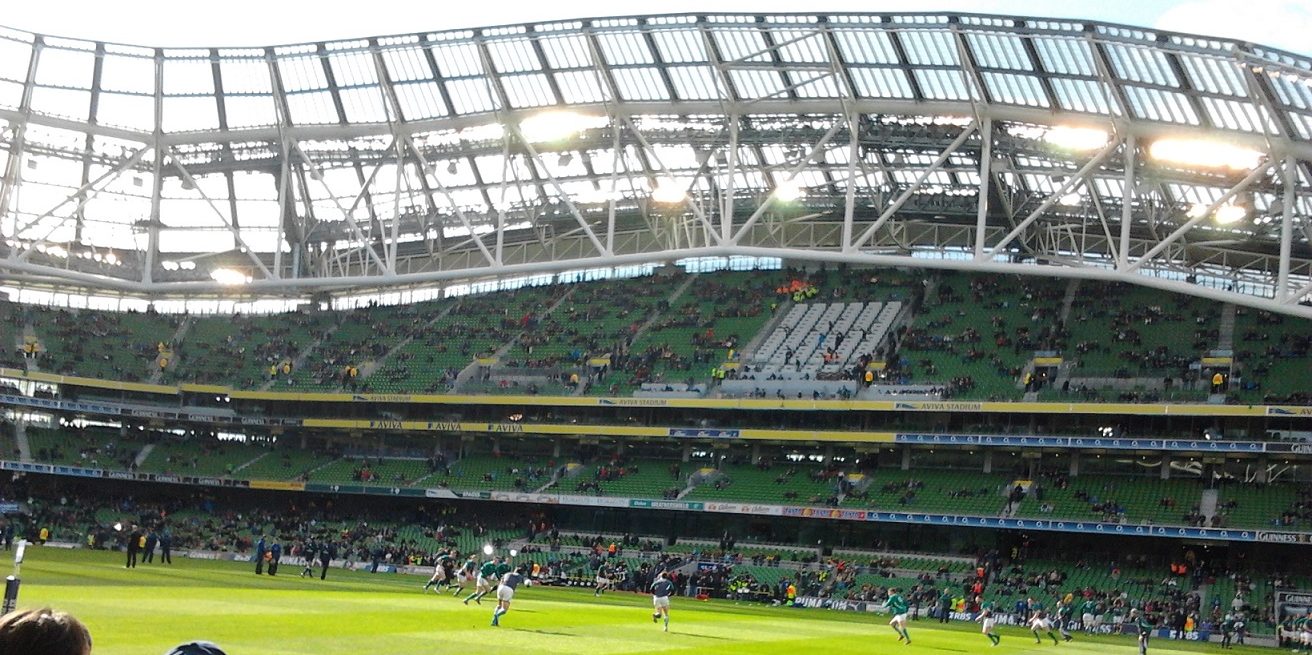
Everything will be all right tonight. Everything will be all right tonight. Or so I keep telling myself, as Ulster prepare to turn and face the strain of Leinster at the RDS. Let’s hope that Ulster can put Big Brother under pressure. It’s simple, really: all we have to do is win. But hope, boys, is a cheap thing, cheap thing: we are the dead.
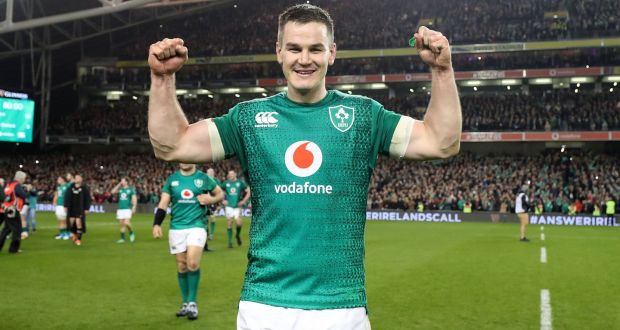
While Ulster have lost Stockdale to injury, one South Effrican is back for us.

But one of Them has apparently recovered from yet another head injury.
Give me steel, give me steel, give me pulsars unreal
In other news – newsman wept (with joy) as he told me – a familiar face is returning to Cardiff.
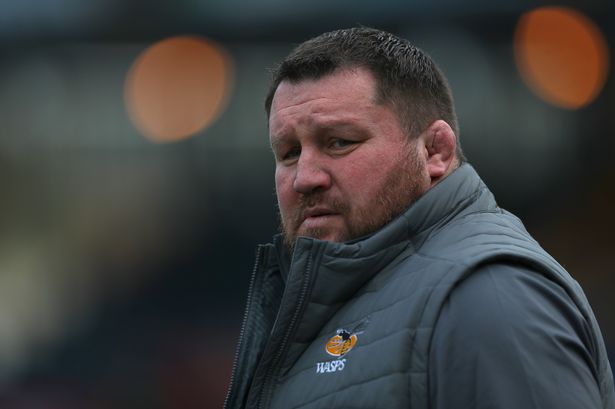
Someone’s back in town the chips are down
I just cut and blackout
I’m under Mulvihill’s influence and my honour’s at stake
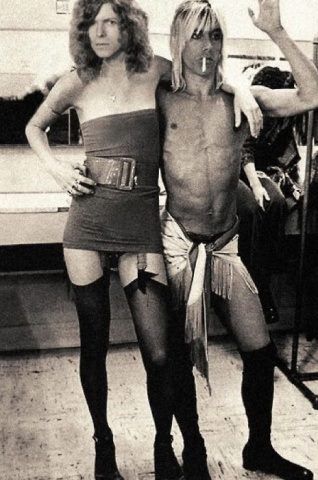
Today is David Bowie’s birthday, in case anyone was wondering.
Onna telly this week
Friday 8th January
| Glasgow v Edinburgh | 19:35 | Premier Sports 2 |
| Leinster v Ulster | 19:35 | TG4 / Premier Sports 1 |
| Bath v Wasps | 19:45 | BT Sport 2 |
| Sale v Worcester | 20:00 | BT Sport Extra |
Saturday 9th January
| Zebre v Treviso | 13:00 | Premier Sports 2 |
| Newcastle v Gloucester | 14:00 | BT Sport 2 |
| Griquas v Cheetahs | 14:30 | Sky Sports Arena |
| Exeter v Bristol | 16:30 | BT Sport 2 |
| Western Province v Sharks | 17:00 | Sky Sports Arena |
| Dragons v Ospreys | 17:15 | S4C / Premier Sports 1 |
| Cardiff v Scarlets | 19:35 | S4C / Premier Sports 1 |
| Connacht v Munster | 19:35 | TG4 / Premier Sports 2 |
Sunday 10th January
| Harlequins v London Irish | 15:00 | BT Sport 1 |
Saturday 16th January
| Glasgow v Edinburgh | 17:15 | Premier Sports 1 |
 Ovally Balls
Not convinced the other shenanigans Deebee mentions would normally be described as the USA ‘going to war’ either which might be why they didn’t get brought up however destructive they’ve been. The Americans have had troops on the ground in Somalia of course, not sure what you call that, and there have been bombings in Sudan etc. Some relatively low level war with Libya under Reagan as well for that matter.
LikeLike
Loads of bases all over the shop, though. Unfortunately for Deebee, nothing south of Kenya.
LikeLike
The Sri Lanka v England Test Match doesn’t look like it will be a very long game.
LikeLiked by 1 person
CMW – just need to get past those pesky openers and the actual batsmen will be playing.
LikeLike
Deebee, I’m pretty sure Libya is in Africa.
Only when it suits them: all the North African countries would rather be European or Med Basin than African, except when it comes to World Cup qualification.
Having a delicious piece of pecan nut pie and coffee for lunch. Watching the cricket. This is what work is all about! Is Jimmy Anderson injured or retired?
LikeLike
Pie and coffee for lunch.
Dessert for lunch.
Need to up my game.
LikeLike
Deebs, they wanted spinners in the team so have given Anderson a rest.
LikeLiked by 1 person
TomP, a (very) short and light version of why they differed:
I think if you look at the circumstances that Vorster and Botha inherited you can see why they had fundamentally different approaches. Firstly, Botha was far more of a hawk than Vorster, who actively sought détente with pliable African countries. He had the luxury of the cordon sanitaire in place, with South African control of Namibia (South West Africa then), Portuguese control of Angola and Mozambique and white control of Zimbabwe (Rhodesia). As such, he had the luxury of trying to forge relations with countries outside of the immediate region. However, from the mid-seventies everything changed: the collapse of the Portuguese regime led to independence of Angola and Mozambique, with Rhodesia not too far behind in reality, whatever Smith said at the time.
South Africa was obviously involved in the conflicts in Rhodesia, Mozambique and Angola during Vorster’s premiership (as well as Namibia), but largely in a limited role, with little ambition to change the status quo. As the seventies unfolded and Botha assumed power in ’77, he believed that Vorster had pandered to the world too much and changed tack, with his total national strategy (or 12-point plan, as it was often referred to as). It was a much more aggressive policy stance that sought to quell internal dissent after the Soweto uprising and similar events, as well as force the ANC’s MK military wing out of neighbouring countries. Destabilising the region was also seen as a way of preventing any meaningful regional response to apartheind South Africa. The alliance between the MPLA in Angola and SWAPO in Namibia meant Botha could vigorously pursue the war there under the pretext of safeguarding Namibia. Also, with Carter being replaced by Reagan and Maggie in power in the UK, he had a buffer at the UN for much of his policy.
Essentially, Vorster tried to create his ‘constellation of southern African states’ based on a principle of non-interference, whilst simultaneously trying to curry favour with other African countries that were not overly opposed to South Africa – Cote d’Ivoire being one, Banda’s Malawi another. Botha preferred kragdadigheid (crushing opposition with absolute power), leading to the eventual imposition of total sanctions against South Africa. Interestingly, whilst most of the blame for supporting SA is apportioned to the UK and USA, France was the last country to impose military sanctions on SA, supplying much of the technology for the development of our own fighter jets and missile systems amongst others, building our nuclear reactors (used to then produce a few crude nuclear weapons) and many of our large dams, used to irrigate farms and supply cities with water. Flair, apartheid was your fault.
LikeLike
Deebee, yeah, I read the book by Miller that came out a few years ago. Perhaps I should have said it was weird for me.
France in Africa is a whole bundle of fun. But then you have Africa in France, all that naughty money.
LikeLike
This book by Miller:
LikeLike
CMW – you’re right that the USA didn’t actually go to war in Africa much, and probably won’t as there is little of strategic importance here for them. But they did get involved in many existing wars in Africa, from a weapons and logistics support and training perspective, as did the Soviets, Cubans and to a lesser degree the Chinese. France has probably been directly involved in more wars in Africa than any other outside power, usually in support of existing regimes against rebel groups and more lately Islamist movements in the Sahel.
Interestingly (or not), there is a new contestation emerging in the Sahel between the Saudi-led coalition, including Egypt and the UAE for influence and trade, and Turkey and Qatar (independently, mostly). Iran is also playing a role and it’s starting to become a somewhat toxic mix of politics, religion and money that may start to result in new conflicts emerging. Ethiopia may well be the immediate next theatre, as the domestic conflict between the Oromo-led central government and the Tigrayan People’s Liberation Front who used to run the country escalates and threatens to draw in other countries. The TPLF have already bombed Eritrea to force the central government’s hand if Eritrea responded (thus far, not much), whilst Sudan is mobilising troops and moving into disputed areas on the western side of northern Ethiopia – almost certainly with Egypt’s backing as the dispute over the Grand Renaissance Dam simmers and grows. From being the Horn of Africa’s kingmakers, the Ethiopians are now caught on the horns of a dilemma, with adversaries on most sides.
TomP – the US has (or may be had) a base in Botswana for years, but I think it was slated to close last year or the year before.
LikeLike
When I talk about Africa, for clarification, I generally refer to the 49 countries south of the Med basin ones.
tomP – haven’t read that Miller book, will look out for it.
LikeLike
I hope this is true
LikeLiked by 1 person
Deebee, if you have a kindle, or don’t mind reading off the computer, it’s available from our friends at z- lib.org for a tasty 0 Rand.
LikeLiked by 1 person
OT, that’d be terrific. I just looked up Harry’s baldness and found an article from the Tatler that mentions
LikeLike
Jesus, Tatler’s Bridgerton Central these days.
LikeLike
Tomp – be honest, you have a big pile of Tatler magazines under your bed.
LikeLike
To be fair, he’s a busy man what with running the country and what not.
LikeLike
Bosses in any sector don’t read anything anyway.
LikeLiked by 1 person
yeah who needs to read stuff.
LikeLike
‘Downing Street has said Boris Johnson maintains confidence in the fisheries minister after she admitted not reading the post-Brexit trade deal with Brussels when it was agreed because she was busy organising a nativity trail.’
A classic of genre
LikeLiked by 2 people
not that she’d have done anything if she had read it, but still, at showing some effort would be better.
LikeLiked by 1 person
LikeLiked by 4 people
‘Police in the United States are three times more likely to use force against leftwing protesters than rightwing protesters, according to new data from a nonprofit that monitors political violence around the world.’
Fascinating if true.
LikeLike
Jamie Ritchie re-signs for Embra on “the longest deal in the club’s history”.
LikeLike
“the prime minister is fully aware of the deal.”
Aware that it exists or aware of the contents?
I get organisational heads tend to be busy but would hope they’d be at least effectively briefed.
LikeLike
Chimpie – what figures being compared there?
LikeLike
I’m far to busy to actually read that, craigs
LikeLiked by 3 people
And important, obviously.
LikeLike
I found it. Police brutality in 4.7% and 1.4% of left and right wing protests respectively.
I thought it would be higher tbh.
LikeLike
Thanks for looking that up and reporting back. I may hire you as a special advisor
LikeLiked by 1 person
Overall, 94% of the leftwing demonstrations in the past ten months were peaceful, compared with 96% of the rightwing demonstrations, according to ACLED’s most recently updated data.
Could easily be written as ‘left wing protests 50% more likely to be violent compared to right wing protests’.
LikeLike
Salary is all the cheese on toast you can eat.
LikeLike
I just need the raw ingredients, thanks.
LikeLike
How are left wing and right wing being defined?
LikeLike
The majority of the protests ACLED categorized as leftwing were Black Lives Matter demonstrations, but also included pro-Biden demonstrations; protests by left-leaning groups such as Abolish ICE, the NAACP, or the Democratic Socialists of America; and protests associated with anti-fascists or left-leaning militia groups and street movements.
The rightwing protests included pro-Trump and pro-police demonstrations, including “Blue Lives Matter” rallies; rightwing protests against coronavirus public health restrictions; protests involving QAnon conspiracy theory supporters and others associated with the “Save Our Children” movement; and the “Stop the Steal” rallies promoting Trump’s false claims about his 2020 election loss.
LikeLike
I suspect that if you reallocate the “pro-Biden demonstrations” to the right wing category then you will find that the difference is even greater.
LikeLike
For Ticht (and anyone else who might be interested). Celtic Connections is virtual this year, which is hardly a surprise, and starts tomorrow. Info on the website below…
https://www.celticconnections.com/
LikeLike
@Deebee – Nobody suggested that the USA didn’t exert its influence in all parts of the world (and often to some pretty disastrous effects). The conversation was about wars they have directly entered (or are the ones various presidents are claimed to have ‘started’*)and that’s why Africa (bar Libya) didn’t get much of a mention.
*My theory is that they generally enter wars they didn’t start and start wars they don’t enter, but there we are…
LikeLiked by 3 people
CMW
Korean and Vietnam wars?
LikeLike
Yip, not disputing that CMW. Oviously I’m now outraged that the USA can’t be bothered to start wars in Africa. What do we get? Mark bloody Thatcher spending ‘large splodges of wonga’ on a boys own adventure to overthrow a tin pot dictator in Gabon. For shame. Got bust in Harare and didn’t even reach Libreville. Twat.
LikeLiked by 1 person
@Slade – Maybe and maybe?
LikeLike
I think Korea was an aggressive war against the yellow peril expansion. Effectively NATO vs the reds
Vietnam seemed more like or was presented more like an unwilling sucking into an expanding conflict. The fact is the USA had been in Vietnam for years, during and following the French ‘presence’ seeking to prop up a puppet – pouring more and more resource into the conflict. USA plus a few token others against the commies.
Somehow the USA has oscillated between being the world’s policeman (not entirely self-appointed) to international hooligan (Bay of Pigs, Nicaragua, Venezuela, Iraq.
The hooligan aspect created a lot of enemies in a changing world – one in which a small number of people could create massive mayhem in the face of incompetence e.g. 9/11 and other bombings.
As a nation they do not seem to have a medium/long term realistic global plan towards peace. And now they feel threatened and under pressure from 3 (at least) directions:
– China, Russia, the Muslim world
and in different ways:
– militarily, electronically and economically.
Traditionally, they had military might and global sway. Electronics and “terrorism” has changed all that resulting in loss of moral high ground, trust and direction.
Just as domestically they need a massive reconciliation so internationally they need a massive re-set; to me, the two are closely linked in cause and effect.
Blather over.
LikeLiked by 1 person
Slade – yes, international hooliganism is a very good description.
It’s also true – as mentioned yesterday – that being At War is very good for re-election prospects. I remain convinced that the Bush government knew about the 9/11 attacks and decided not to stop them – but had no idea how ‘successful’ they would be; probably thought a handful of people might be injured or killed, much like the previous WTC attack. Then it was a case of, ‘oh fuck, what do we do now?’ (I know! Let’s attack Iraq, who had nothing to do with it! Most Americans believed that Iraq DID have everything to do with it, so successful was the propaganda.)
On the other hand, the US really did play an important role in the Northern Ireland peace process, particularly Sen Mitchell.
LikeLike
… And it’s also true that Americans were a major funding source for the IRA.
LikeLike
Americans are different to the USA, surely? Unless done with the tacit support of the state.
Just finished watching a Netflix series on street food in Latin America. La Paz looks like a magical place. Anyone been there?
LikeLike
Other than the CIA, obviously.
LikeLiked by 1 person
Deebs – complicated question. There were certainly some US politicians who tacitly supported the IRA, but very few overtly. More of them – and this likely includes Biden – supported their goals but not their methods, which is fair enough in my view.
But you could go into any Irish bar and find people taking up ‘collections’. How much of that actually made its way to the ‘Ra is another question, but certainly a good wodge did.
I have been to Buenos Aires, Santiago and a smaller Chilean town further north, where my sister lives. In Buenos Aires, street food is pretty much steak. The road workers – and almost all the roads/pavements seem to be under construction all the time – bring barbecues to make their lunch.
LikeLiked by 1 person
‘Any’ Irish bar is an exaggeration. But there was one called Four Green Fields – an obviously political name – near where I lived where this happened frequently. The people donating really had no idea what it was they were supporting.
LikeLike
I read an interesting article a while back (I can’t find it now) that suggested that anti-British resentment from the Irish diaspora in the US was much worse than anti-British resentment from Irish elsewhere in the world. They put this down to what happened during the potato famine:
– Basically if you were dirt poor during/after the famine and were too poor to keep living in Ireland the only place you could afford to go was to work in the pits or mills or similar in England, Wales, or Scotland.
– The British government ran out of ways to try and fund famine relief, particularly as the budget surplus had disappeared as the economy declined with the collapse of the railway boom. So they ended up taxing the landlords to try and pay for the famine relief, which annoyed them and which they couldn’t afford anyway as their own incomes had been drastically reduced. These effectively bankrupted landlords could, however, just about afford to get over to the US to avoid these new liabilities.
So the people who weren’t as poor as the poorest but were still hard done to fled to the US, and the reason they were in dire straits was directly because of UK government policy so they HATED them. And so strong support for Irish republicanism carried on for a long time aftewards. Whereas those that went to work in industrial Britain didn’t feel it was as a direct result of government policy (that’s the narrative anyway) and so there wasn’t much in the way of long term support for republicanism amongst that part of the diaspora. In my neck of the woods growing up it took a very strange person to support the PIRA (not a united Ireland as such, that has always been seen as reasonable) whereas it seems to have been more common in the US.
LikeLiked by 2 people