Lamont is another one, I’d only ever heard Lahmint in Scotland until old Norman came along and turned it into something far posher with the emphasis on the second syllable
Most foreign names get mangled by foreigners because either the sound doesn’t exist in the language or the spelling doesn’t fit the expected pronunciation.
For all I know Norman Lamont may have said his name the Scottish way once upon a time but heard the English mangling so often that he gave up.
The first time I said Martina Navratilova’s name to a Czech they corrected me but I said it the standard BBC English way and I’d sort of trusted the BBC way of saying it. If they could put the diacritics on those kind of names it would help.
When I first went to Spain I thought my pronunciation of names was bloody good. Alas, not. I took to printing out my hotel booking slips for taxi drivers after that and always kept a hotel card with me when getting about. Ditto my experiences in the rest of Europe. Especially when speaking English in Liverpool.
Thankfully my surname is only 4 letters and one syllable long. Makes it easy to remember – except when giving it to someone in a shop and speaking (I think clearly) through a mask and they give two completely different letters to the end of my name.
Thankfully my surname is only 4 letters and one syllable long. Makes it easy to remember – except when giving it to someone in a shop and speaking (I think clearly) through a mask and they give two completely different letters to the end of my name.
This is a coincidence, I was talking with a fellow Scot yesterday about some words in Scots and how they come directly from Northern European languages, like kirk, braw, kist, breeks, cloot, ilka, (church, good, chest, trousers, cloth, each) etc, but the one that makes me smile is that the Scots word for dust is “stoor” and to suck is “sook”, the Norwegian word for a vacuum clear sounds exactly like “stoor sooker”.
Ticht, yes, Afrikaans is based on old Dutch, although today the language is said to be closer to Flemish than Dutch. It’s quite a melting pot though, with words and phrases from German, French, Portuguese, Khoisan, Malay, Zulu and other languages too. I know that I struggle with Dutch if people speak quickly, but when I’m in the DR-Congo and you meet with Flemish Belgians, you can converse fairly easily.
The history of Afrikaans is really transnational. It’s obviously a “newish” language as it couldn’t have existed before the 17th Century. It was thought of as very inferior to Dutch and reached its official prominence as a result of a political campaign to take over from Dutch, which was an official language until 1925, and political circumstances around the time. There’s a big monument to the language on a hill outside Paarl, but that tells only half the story. Isabel Hofmeyr wrote a great thing about that and Achmat Davids develops the picture.
(X can be a person or thing – fun/enjoyable/amusing) – There is a chain of petrol stations called “Great Gas” – which I do wonder if it goes over the head of non-locals
Glanced at that – it’s a days work to read it all but couple of comments on footnotes
– From Irish cnáibhseáil, “grumbing, complaining” – cnaibh (k-naav) is a bone
– I have been informed that it is from the Irish mí ádh, “bad luck”
I was once staying with relatives and space of 2 days fell off a Honda 50 at moderate speed and ended up in car crash where the car ended upside down (that’s loose chips and bad tyres for you). About a week later, car repaired and all – we were on the road again and heard the sound of a flat tyre – we got out and looked at the flat
– my uncle said nothing for a moment and then commented “Chris(h)t! you’re an awful mí ádh” – ie bringing bad luck and misfortune.
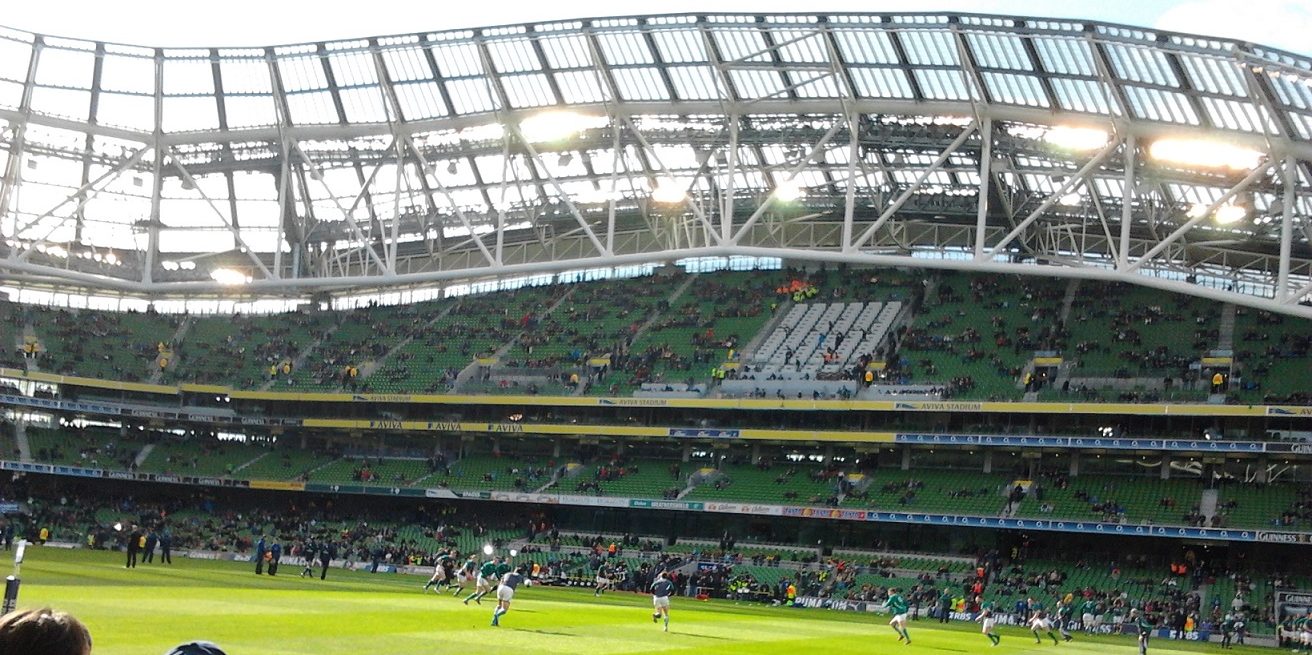
 Ovally Balls
Lamont is another one, I’d only ever heard Lahmint in Scotland until old Norman came along and turned it into something far posher with the emphasis on the second syllable
LikeLike
Costello the Elvis way you also hear with Frank the gangster, who wasn’t Irish but Italian. He Hibernified his name when he got to the States.
I heard Lamont Dozier’s name when I was young and that’s pronounced the old Badger-haired twat way. See also
LikeLike
Most foreign names get mangled by foreigners because either the sound doesn’t exist in the language or the spelling doesn’t fit the expected pronunciation.
For all I know Norman Lamont may have said his name the Scottish way once upon a time but heard the English mangling so often that he gave up.
The first time I said Martina Navratilova’s name to a Czech they corrected me but I said it the standard BBC English way and I’d sort of trusted the BBC way of saying it. If they could put the diacritics on those kind of names it would help.
LikeLike
When I first went to Spain I thought my pronunciation of names was bloody good. Alas, not. I took to printing out my hotel booking slips for taxi drivers after that and always kept a hotel card with me when getting about. Ditto my experiences in the rest of Europe. Especially when speaking English in Liverpool.
LikeLike
A madrileña friend of mine did her Erasmus year in Liverpool She said the local taxi drivers often complimented her on her English.
LikeLiked by 1 person
Thankfully my surname is only 4 letters and one syllable long. Makes it easy to remember – except when giving it to someone in a shop and speaking (I think clearly) through a mask and they give two completely different letters to the end of my name.
LikeLike
“Thankfully my surname is only 4 letters and one syllable long.”
I thought it might be Karl, but that would be easy to remember when giving it to someone in a shop.
LikeLiked by 1 person
@bb
My deepest sympathies, Mr Bunn.
LikeLike
Bet none of you can say Sven Goran Ericsson properly.
LikeLike
Bet I can spell it properly.
LikeLiked by 3 people
Now now. Sven probably was giving it to someone in a shop while wearing a mask when Craigs took his name down.
LikeLike
Tomp – I gave up when my phone didn’t have the a with the dots.
LikeLike
But go how do you say it?
LikeLike
LikeLike
When he was properly famous: Sven.
More recently: Eriksson.
LikeLike
Cmw – ok, you’ve purposefully avoided the hard part. Plus I bet you’d fuck up saying Eriksson.
LikeLike
Cräigs,
I’d say Svennis. No need to add anything else.
LikeLike
“ok, you’ve purposefully avoided the hard part.”
How dare you!
LikeLike
Sven yurrran eerikssonn. Sort of. My mum always winces slightly when I try to say it or any Swedish for that matter.
LikeLike
That clip of Faf shows why scrumhalves should always be captain and unquestioned by the ref and opposition.
LikeLike
Deebs – the comedy benny hill falling over or the comedy man get hit by football?
LikeLike
Pfft! The Benny Hill falling down was quite funny though!
LikeLike
Craigs, would he be known in Sweden as Sven or Sven-Goran (with the dots)?
LikeLike
This is a coincidence, I was talking with a fellow Scot yesterday about some words in Scots and how they come directly from Northern European languages, like kirk, braw, kist, breeks, cloot, ilka, (church, good, chest, trousers, cloth, each) etc, but the one that makes me smile is that the Scots word for dust is “stoor” and to suck is “sook”, the Norwegian word for a vacuum clear sounds exactly like “stoor sooker”.
LikeLike
LikeLike
@ticht
I’d have thought “braw” – meaning good was from Gaidhlig – breágha meaning good/fine same as Irish “breá” (pronounced braaw)
LikeLike
Both from the French “brave” originally it seems, trisk
LikeLike
Trisk, the fact that it’s common to Norwegian, Swedish, German etc marks out a different root to Gaelic, I think.
Middle French words would have a root in Latin, probably
I’ve just found a page here which has braw as one of the example words
https://www.makforrit.scot/scots/scots-an-ither-leids/
LikeLike
ticht, the very first on that list is interesting as “advocate” comes from Latin originally.
LikeLike
I had a look at a few of those words there and I see “flitting house” or moving house is “flytte huset” in Norwegian.
Cultural stereo-type alert;
I phoned my mate in Aberdeen the other day, He said he had been stripping wallpaper.
I said, “Are you decorating?”
He said, “Nah, I’m flitting”
LikeLike
Afrikaans equivalents:
kirk – kerk
kist – kis or kas
breeks – broeke
ilka – elke
stoor – stof
sook – suig
stoor sooker – stof suier
No wonder so many of our lads feel at home in Scotland!
LikeLiked by 2 people
Well, again advocat is old/middle French from Latin.
The discussion I had with my friend started in fact with French words in Scots
LikeLike
Deebee, I guess Afrikaans will have a lot of Old Dutch, is that the link?
LikeLike
They feel the call to come home, Deebs.
LikeLiked by 1 person
The word ‘craic’ has an interesting and amusing history
https://www.irelandbeforeyoudie.com/craic-the-history-meanings-and-origins-of-craic/
Growing up we used to talk about “having a crack” when we were having a laugh and it never felt particularly Irish.
LikeLike
Ticht, yes, Afrikaans is based on old Dutch, although today the language is said to be closer to Flemish than Dutch. It’s quite a melting pot though, with words and phrases from German, French, Portuguese, Khoisan, Malay, Zulu and other languages too. I know that I struggle with Dutch if people speak quickly, but when I’m in the DR-Congo and you meet with Flemish Belgians, you can converse fairly easily.
LikeLike
“having a crack” – same origins as ‘crack me up’ for a laugh, I’m assuming?
LikeLike
“same origins as ‘crack me up’ for a laugh, I’m assuming?”
Unless you’re talking to your dealer
LikeLike
‘your dealer’ Posho! Who has their own dealer?
LikeLike
“One’s dealer”, in fact.
LikeLiked by 1 person
The history of Afrikaans is really transnational. It’s obviously a “newish” language as it couldn’t have existed before the 17th Century. It was thought of as very inferior to Dutch and reached its official prominence as a result of a political campaign to take over from Dutch, which was an official language until 1925, and political circumstances around the time. There’s a big monument to the language on a hill outside Paarl, but that tells only half the story. Isabel Hofmeyr wrote a great thing about that and Achmat Davids develops the picture.
LikeLike
Ticht – probably Sven.
LikeLike
Talking of Scots and South African links…
At Blair Castle in Perthshire where it turns out the the current and previous Duke of Atholl are South African!
I don’t know, coming over here and stealing our landed titles. Seems only fair then that we borrow some of their rugby players.
LikeLike
@OT
The other epithet is “gas” – “X is (great) gas”
(X can be a person or thing – fun/enjoyable/amusing) – There is a chain of petrol stations called “Great Gas” – which I do wonder if it goes over the head of non-locals
LikeLike
trisk, a cousin(ish) of mine sent me a link to this a while back. It’s the berries.
https://boyowulf.home.blog/
LikeLike
Trisk
I’d have thought “braw” – meaning good was from Gaidhlig – breágha meaning good/fine same as Irish “breá” (pronounced braaw)
TomP
Both from the French “brave” originally it seems, trisk
In Norn Iron, ‘brave’ can mean ‘significant’, eg ‘it’s a brave wee walk from here to there’.
LikeLike
Marina Hyde must have been thinking of Deebs when she wrote this: https://www.theguardian.com/commentisfree/2021/jul/16/england-arse-flare-security-wembley-levelling-up
LikeLiked by 1 person
@TomP
Glanced at that – it’s a days work to read it all but couple of comments on footnotes
– From Irish cnáibhseáil, “grumbing, complaining” – cnaibh (k-naav) is a bone
– I have been informed that it is from the Irish mí ádh, “bad luck”
I was once staying with relatives and space of 2 days fell off a Honda 50 at moderate speed and ended up in car crash where the car ended upside down (that’s loose chips and bad tyres for you). About a week later, car repaired and all – we were on the road again and heard the sound of a flat tyre – we got out and looked at the flat
– my uncle said nothing for a moment and then commented “Chris(h)t! you’re an awful mí ádh” – ie bringing bad luck and misfortune.
LikeLike
At Blair Castle in Perthshire where it turns out the the current and previous Duke of Atholl are South African!
And only Duke able to raise a private army in Europe! Be afraid…
LikeLike
he’s not in europe any more
LikeLike